In an empty field where the wind moves through brittle yellow grass and nothing else stirs, a battered cardboard box sat on a cold, flattened patch of ground. Nobody would have noticed it from the road. But inside that box was a whole small world, one that had been left behind.
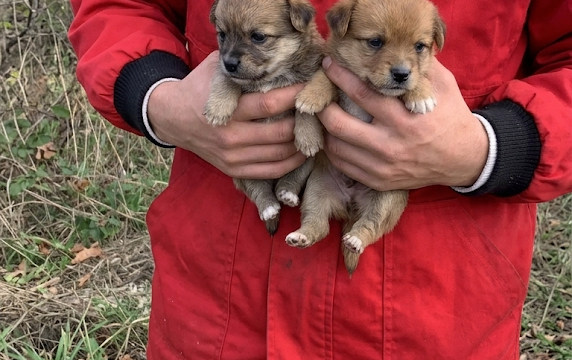
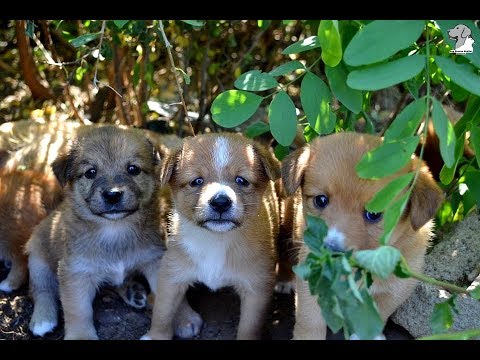
A litter of tiny puppies lay piled together in a trembling heap. There were white ones, cream ones, black ones, and a few with dark brindle markings. Their fur was thin and dull and covered in dust. Their legs were tangled weakly together, their little tails tucked in tight, their heads hanging low. Every one of them was pressed against the others, the way very young animals do when warmth is the only thing they have left to share.
It was easy to see how fragile they were. These puppies looked as though they had been in that box for days. There was no mother nearby. There was no bowl of milk, no scrap of food, no water. And there was no one in sight who had stopped to look.
The cold had gotten into them. Their small bodies shook together in one long, steady tremble, as if the whole litter were a single frightened heartbeat. Their breathing was shallow and ragged, and you could see their tiny ribs rise and fall with every effort. From somewhere inside the huddle came a soft, constant whimpering. Every so often, a thin, broken cry slipped out of one of them and faded into weak little sobs.
If you have ever held a newborn creature in your hands, you know how much it takes to keep one warm and fed and safe. Puppies this young depend on their mothers for nearly everything. They depend on warmth, on milk, on the quiet reassurance of someone nearby. Here, all of that was missing. All they had was a cardboard box, a cold wind, and each other.
The field around them was wide and silent. The grass had gone dry and yellow, with only thin patches of green weeds pushing through. Brown leaves and broken twigs lay scattered across the ground. Tangled bare brush lined the edges, and in the distance a faint row of scrubby trees faded into a pale, hazy sky. The light was soft and flat, the kind that makes everything look a little more lonely than it already is. Long, muted shadows fell across the ground, and the only sounds were the dry rustle of grass and the scrape of tiny claws against cardboard.
Then something happened that is hard to forget.
Slowly, with what looked like enormous effort, one of the puppies, a small cream-colored girl, lifted her head out of the huddle. She turned toward us. Her dark eyes were glazed and glistening, and a tear rolled down her tiny muzzle. She looked straight into the camera and blinked, slowly, like someone too tired to do anything else.
For a moment, she simply stayed there, looking out from that box at a world that had left her behind. Then her head sank back down into the warmth of her brothers and sisters, trembling. A few moments later, she lifted it again. Her small paws shifted weakly against the others, as if even that tiny movement cost her something.
Many of us have felt that kind of look before, from a stray at the edge of a parking lot, or an old dog in a shelter kennel, or a pet waiting at a window. It is a look that doesn’t ask for much. It simply says, I am here. Please see me.
There is something deeply human about how we respond to a moment like this. We feel it in our chests before we can put it into words. Maybe it reminds us of the times we ourselves felt overlooked or left out in the cold. Maybe it reminds us of the little ones we have loved and protected over the years. Whatever the reason, we know in our hearts that no living thing should be left like this, in the cold, with nothing to eat and no one to turn to.
And yet it happens. Every day, in fields and alleyways and quiet back roads all over the country, boxes like this one are left behind. Most of the time, no one sees them. Sometimes a person does, and that changes everything.
For folks of a certain age, this scene may feel especially close to home. Many of us grew up in a time when neighbors looked out for one another and when a stray animal at the door was never simply turned away. We remember the kindness of strangers and the little acts of care that once held communities together. Those values haven’t disappeared. They just need to be passed along, one gentle act at a time.
Think about what these puppies needed in that moment. They needed warmth, to be gathered up in a pair of kind hands and wrapped in something soft. They needed a little food and clean water. They needed a safe place to rest and someone to check that they were all right. None of it is complicated. All it takes is someone willing to stop.
That is what makes this scene so powerful. It isn’t only about how much these little ones were suffering. It is about how little it would take to help. A blanket. A bottle. A few minutes of someone’s time. In a world that moves so quickly, a small act of care can mean the difference between a litter fading away in an empty field and a litter given the chance to grow strong.
As the image slowly draws closer, you can see every detail of that fragile huddle. You can see the dust on their fur and the way their thin legs overlap. You can see the cardboard worn soft at the edges. You can see one small cream puppy looking up, again and again, toward the one place she can see help might come from.
It is a quiet scene, with no music and no voices. There is only the sound of their breathing, the wind in the grass, and the soft, steady cry of a litter that has been left alone.
If you were standing in that field, what would you do? We like to believe we would kneel down, take off our coat, and gather them up without a second thought. And maybe that is exactly what the world needs right now: more people who answer that quiet call and stop when others keep walking.
So the next time you pass a box on the side of the road, or hear a faint cry from the brush, take a moment. Look closer. You may be the only one who ever does. For a tiny, trembling life, you might be the whole world.
Share this story with someone who has a big heart for animals. You never know whose day it might change, or who might be inspired to be the one who stops.