The church had been filled with the kind of beauty people remembered for years. White roses framed the altar, light filtered through tall windows, and every wooden pew held family members and friends dressed for celebration. At the front stood a young bride in a simple white gown, holding a bouquet of white flowers with both hands. Beside her was Daniel, the man she believed she was about to spend the rest of her life with. For one suspended moment, everything seemed peaceful, solemn, and full of promise.

Then the doors opened, and the atmosphere changed.
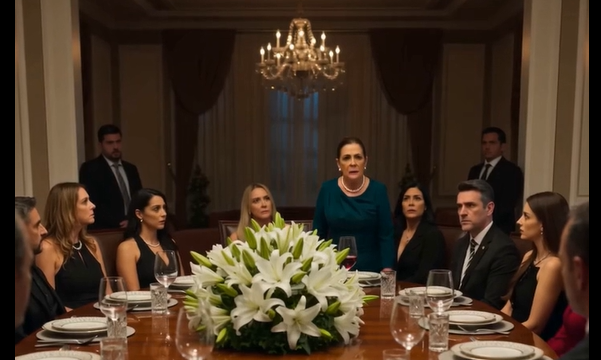
Daniel’s mother came down the aisle with a force that made guests turn in their seats. She wore a royal blue satin dress, pearl earrings, a necklace, and bright red lipstick. Her expression was not confused or worried. She was furious. Her footsteps echoed through the church as she moved toward the altar, ignoring the faces around her.
When she reached the couple, she did not lower her voice.
“My son is not marrying a poor woman like you!”
The words landed harder because they were spoken in a place meant for vows, blessings, and family unity. Conversations stopped. A few guests gasped. Others looked away, embarrassed for the bride. Daniel remained beside her, frozen, as if he could not decide whether to defend the woman he loved or obey the mother who had clearly come to take control.
The bride tightened her hands around the bouquet. She had arrived expecting to become part of Daniel’s family. Instead, she was being judged in front of everyone she cared about. Tears gathered in her eyes, but she tried to speak respectfully.
“I love your son…”
She barely finished the thought before Daniel’s mother cut her off.
“Love doesn’t pay the bills!”
Her voice rang through the church.
The bride lowered her eyes. She had not claimed that love could solve every financial problem. She had only tried to explain why she was standing at the altar. To her, marriage was supposed to be a partnership built on commitment, loyalty, and the willingness to face life together. But Daniel’s mother had reduced everything to money and social status.
That was what made the humiliation so painful. The bride was not being criticized for something she had done. She was being rejected for what she did not have.
Daniel’s mother turned sharply toward her son. The anger in her face became a command.
“Daniel, we’re leaving!”
She grabbed his arm and pulled him away from the altar.
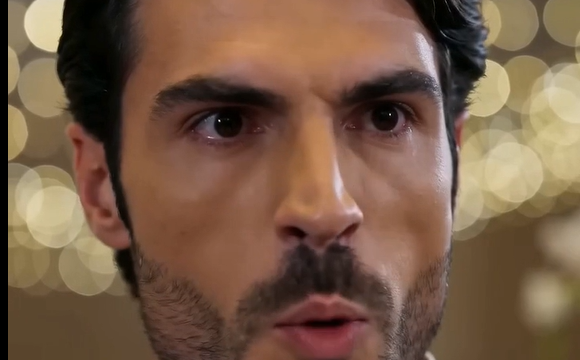
Daniel looked at his mother, then back at his bride. His face showed guilt and uncertainty, but he did not immediately step away from his mother’s grip. That hesitation became its own answer. The bride watched him, waiting for him to say something strong enough to stop what was happening.
He did not.
Around them, the guests whispered. Some appeared shocked by the mother’s behavior. Others watched Daniel, perhaps wondering whether he would finally choose for himself. The church that had been prepared for a wedding now felt like the stage for a painful family confrontation.
The bride’s bouquet began to tremble in her hands.
Her tears were no longer hidden. They rolled down her cheeks as she watched the man beside her being pulled away. Every detail around her seemed suddenly unbearable: the white roses, the warm lights, the formal clothing, the relatives sitting in rows, and the arranged ceremony that had taken months to prepare.
Daniel looked back at her.
“Mom…” he said weakly.
It was not a declaration. It was not a defense. It was only a hesitant word, spoken by a man caught between two women and unable to take a clear stand.
For the bride, that may have hurt more than the insults.
Daniel’s mother had been openly cruel, but her position was clear. She believed wealth mattered more than love, and she did not want her son marrying someone she considered beneath their family. Daniel, however, had stood at the altar promising a future with the bride. His silence now exposed a painful truth: love without courage can leave the person you claim to love completely alone.
The bride remained beneath the floral arch while Daniel and his mother moved farther from her. The background blurred through her tears. She could hear guests shifting in the pews and murmuring, but none of those sounds mattered anymore.
She had entered the church as a woman preparing to begin a marriage. In a matter of moments, she was standing alone in front of an audience, watching that future collapse.
There was no dramatic revenge, no sudden fortune, and no powerful stranger arriving to rescue her. The heartbreak came from something more ordinary and more recognizable: a family placing status above character, a controlling parent refusing to respect an adult child’s choice, and a partner failing to speak when his voice mattered most.
For many people, especially those who have lived long enough to see marriages tested by money, family pressure, illness, work, and changing circumstances, the scene carries a difficult question. What truly holds a marriage together when appearances disappear?
Financial stability matters. Responsible planning matters. Families are allowed to have concerns. But concerns can be expressed without humiliation. A parent can ask hard questions without attacking someone’s dignity. And an adult preparing for marriage must eventually decide whether the relationship belongs to the couple or to everyone around them.
The bride’s simple gown and modest background did not prove she was incapable of building a stable life. Daniel’s mother’s wealth and polished appearance did not automatically make her judgment correct. The conflict was not really about whether money matters. It was about whether money should determine a person’s worth.
At the altar, Daniel had an opportunity to answer that question through his actions.
He could have calmly told his mother that he loved and respected her, but that the decision to marry was his. He could have asked her to stop insulting the bride. He could have protected the dignity of both women without shouting or creating a larger scene.
Instead, he hesitated.
That hesitation left the bride crying alone.
As the ceremony fell apart, the final image was not the angry mother or the conflicted groom. It was the bride beneath the white flowers, struggling to breathe through tears while the people behind her watched helplessly.
The moment was devastating because weddings are built around public promises. A bride and groom stand in front of witnesses precisely because commitment is supposed to mean something beyond private emotion. Yet when the first serious test arrived, Daniel’s promise had not even been spoken before outside pressure began deciding his future.
The bride’s heartbreak was not simply about a canceled ceremony. It was about discovering, at the worst possible time, that the man beside her might not be ready to stand beside her when doing so becomes difficult.
Money can pay for a beautiful church, elegant clothing, flowers, music, and a reception. It can create comfort and opportunity. But it cannot replace respect.
And on that day, in a church filled with white roses and stunned guests, respect was the one thing the bride needed most.