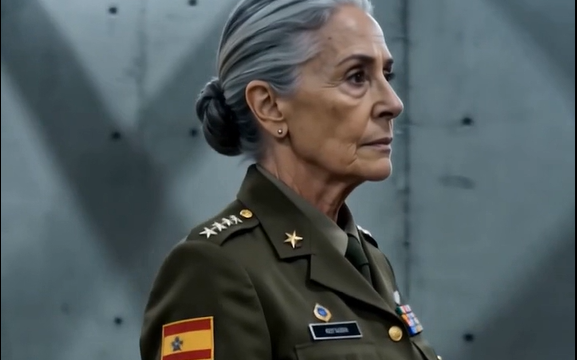
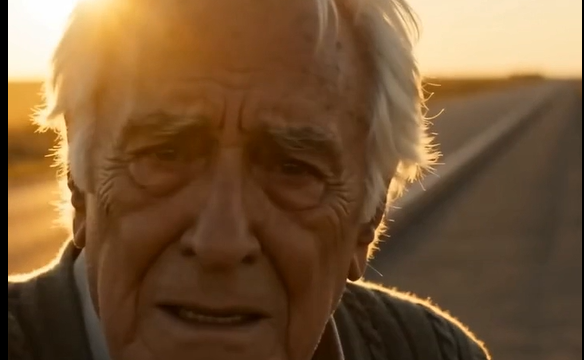
Linda Carter never thought of herself as cruel. She thought she was simply busy, practical, and tired. At fifty-two, she managed a small insurance office, paid the mortgage on a house that always needed repairs, and raised her ten-year-old son, Ethan, after her divorce. Her aging father, Harold, lived with her because his knees had weakened. Linda told herself she had done the decent thing by taking him in. But doing the decent thing and doing it with love were not always the same.
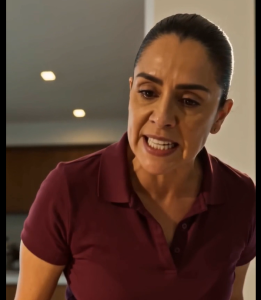
Harold had once built porches, fixed engines, coached little league, and carried Linda on his shoulders through county fairs. Now he moved slowly, holding the wall for balance, apologizing whenever he dropped a spoon or forgot his glasses. Linda hated those apologies because they reminded her that time was taking him away.
One cold Sunday afternoon, Linda was preparing dinner while answering work emails. Harold came in with trembling hands, carrying warm soup. Ethan sat nearby with a comic book open, though his eyes were on his grandfather. Harold took three careful steps. Then his slipper caught the edge of the rug. The bowl tipped, soup splashing across the floor.
Linda snapped before she thought. “Dad, move! Just get out of the way.”
She grabbed his arm and pushed him aside harder than she meant to. Harold stumbled against the counter, embarrassed. He did not shout. He only lowered his eyes and whispered, “I’m sorry, sweetheart.”
That soft word should have broken something open in her. Instead, Linda grabbed towels and muttered about messes and bills. She did not notice Ethan standing frozen by his chair, watching her hand on Harold’s sleeve as his grandfather turned away.
Two weeks later, Harold moved into a senior care home. Linda told everyone it was for his safety. Maybe part of that was true. The stairs were steep, and Harold needed more help than she could give. But late at night, when the rooms were quiet, Linda knew another truth. She had sent him away because his weakness made her impatient. She visited at first every Sunday, then every other Sunday, then whenever she could manage. Harold never complained. He kept a photograph of Ethan on his nightstand and asked about him every time.
Years passed quietly at first and then all at once. Harold died on a rainy April morning, holding a nurse’s hand. Linda cried at the funeral, but grief came tangled with guilt, and guilt was easier to bury than face. Ethan grew taller, went to college, moved to Dallas, married Rachel, and built a career in real estate. Linda was proud, though their calls felt like appointments.
By seventy-three, Linda’s hands ached, her balance wavered, and her memory sometimes betrayed her. She still lived alone in the same house, but the stairs seemed higher than before. Ethan visited once a month, usually in a hurry, checking lightbulbs, glancing at his phone, and asking if she had considered “a better arrangement.” Linda knew what that phrase meant. She always changed the subject.
One Thanksgiving, Ethan, Rachel, and their little daughter, Sophie, came for dinner. Linda had spent two days preparing to prove she was still capable. The turkey was dry, the potatoes needed salt, and the rolls were too brown. Still, the table looked beautiful, with Harold’s old candlesticks shining in the center.
After dinner, Linda carried dishes toward the sink. Her wrist gave out, and a glass shattered across the tile.
Ethan jumped up, irritated. “Mom, stop. Just stop. You’re going to hurt yourself.”
“I can clean it,” Linda said, embarrassed.
“No, you can’t.” He took her elbow and moved her aside. The motion was firm, dismissive, and painfully familiar. “You’re always in the way when you try to help.”
The room went silent.
Linda stared at his hand on her arm. In that instant, the kitchen disappeared. She was fifty-two again, standing over spilled soup. Her father was against the counter, small with shame. Ethan was ten years old, watching from beside his chair. Every word she had thrown at Harold returned with terrible clarity. Every sigh, every impatient glance, every visit she had postponed. She had thought children forgot such moments. Now she understood. They did not forget. They learned. It was late, but not too late for the living to learn a gentler, more patient way forward together.
Sophie, only seven, stood clutching her napkin, eyes fixed on her father. Linda saw the same look Ethan had worn years before. The lesson had traveled through the family like a hidden inheritance.
Ethan looked down at his daughter, then back at his mother. Something in his face shifted. Maybe he had heard himself for the first time. Maybe he had seen what Sophie was learning. Linda did not know. Her voice trembled when she said, “I said almost those exact words to my father once.”
Ethan frowned. “What?”
Linda steadied herself against the counter. “Your grandfather spilled soup. I was tired, angry, and embarrassed, and I pushed him aside. You were there. I never apologized to him. Not really.”
Ethan’s expression changed from confusion to recognition.
“I remember,” he said quietly.
Linda swallowed. “I told myself I was overwhelmed. Maybe I was. But I still hurt him. And now I hear my own voice coming out of you.”
Ethan’s face turned pale. He looked at Sophie again. She was crying without a sound. That broke him. He knelt in front of her and said, “Sweetheart, I’m sorry you heard me speak that way. That is not how we treat Grandma.”
Then he turned to Linda. For a moment he was not the successful man with the busy calendar. He was the boy in the kitchen, still holding an old lesson he had never asked to receive.
“I’m sorry, Mom,” he said. “I thought I was helping. But I sounded cruel.”
Linda shook her head, tears slipping down her cheeks. “You sounded like me.”
No one knew what to say. Rachel quietly swept up the glass. Ethan helped Linda into a chair, not by grabbing her elbow, but by offering his arm. Sophie climbed into her grandmother’s lap and held her.
That evening, Ethan took Harold’s candlesticks from the table and polished them. He asked Linda to tell Sophie a story about her great-grandfather. Linda spoke about the man who built tree houses, sang off-key in church, and carried peppermints. For the first time in years, Harold’s memory did not feel like punishment. It felt like a warning and a gift.
The next morning, Ethan asked if they could visit every Sunday, not out of duty, but as family. Linda knew one phone call could not erase the past. Regret does not disappear because someone understands it. But sometimes understanding opens a door that pride kept locked for years.
Linda never got to apologize to Harold the way she should have. That truth stayed with her. But when Sophie came the following Sunday and took Linda’s hand on the stairs, Linda felt something gentle begin to heal. The family had been speechless because they had seen themselves clearly. And once they saw it, they could choose not to pass the pain any further.