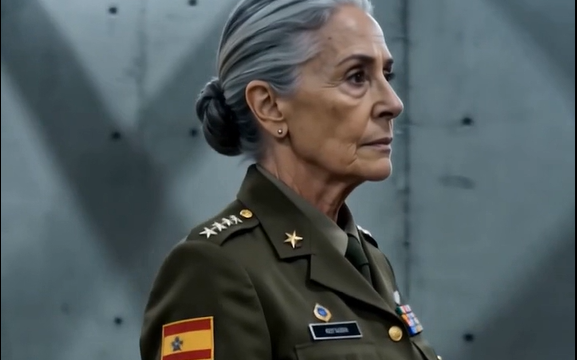
For twelve years, Maren Whitlow measured her life in alarm clocks, packed lunches, and office emails answered long after dinner. She was fifty-two, old enough to know success rarely arrived with trumpets, yet stubborn enough to chase earned recognition. At Donnelly & Pierce Insurance, she trained new hires, rescued accounts, calmed clients, and remembered birthdays others forgot. Every December, her manager promised, “Next year, Maren. Your time is coming.” Every January, someone louder stepped ahead.

That Tuesday morning, she entered the conference room expecting another disappointment. Instead, Mr. Donnelly stood at the head of the table with a folder and a fatherly smile. “Maren,” he said, “we would like you to become regional operations director.”
For a moment, she could not speak. The title sounded too large for a woman who still bought clearance blouses and drove an old sedan. Then applause filled the room. People she had helped stood clapping, and tears stung her eyes. She thought of weekends spent working while Joel complained that she cared more about spreadsheets than marriage, and of the fear that she had given everything to a company that would never see her.
Now they saw her.
She called Joel from the parking garage before driving home. He did not answer. Joel had been distant for months, speaking in short replies and turning his phone face down whenever she entered the room. Maren told herself he was tired. After twenty-seven years, love did not always sparkle. Sometimes it simply stayed.
So she stopped at Russo’s Bakery and bought a small lemon cake, Joel’s favorite. At the florist next door, she chose white daisies from her wedding bouquet. “Sounds like tonight is special,” the young clerk said.
“It is,” Maren answered, and for the first time in years, she believed it.
The house was dark when she arrived, except for the kitchen light. Joel sat at the table in his work shirt, sleeves rolled to his elbows. A manila envelope lay in front of him. Maren noticed it before she noticed his face. The cake box felt heavy in her hands.
“Joel?” she said. “What’s going on?”
He pushed the envelope across the table. “I need you to read these.”
She opened it slowly. The first words blurred, then sharpened with cruel clarity. Petition for Dissolution of Marriage.
Maren lowered herself into the chair across from him. “Divorce papers?”
Joel looked at the table, not at her. “I’m sorry.”
Daisies trembled in Maren’s hand until she set them down.
“Today?” she whispered. “You picked today?”
His jaw tightened. “I didn’t know about your promotion.”
“I left you three messages.”
“I was busy.”
The answer was so small, so practiced, that anger finally broke through her shock. “Busy ending our marriage?”
Joel rubbed his forehead. “Maren, this has been over for a long time.”
She stared at the man who had once sat beside her after surgery and danced barefoot with her when they could not afford an anniversary dinner. “Over for whom?”
He swallowed. “For both of us, if you’re honest.”
“No,” she said. “Don’t make me carry your decision too.”
Silence stretched between them. Then Maren saw something near his left wrist: a faint smear of coral lipstick on his cuff. It was not hers. She had stopped wearing lipstick years ago.
A colder understanding moved through her. “Who is she?”
Joel’s face changed so quickly that she had her answer before he spoke. “It isn’t like that.”
“It is exactly like that.”
He walked to the sink, as if distance helped. “Her name is Lila.”
Maren laughed once, a sound with no humor in it. “Of course she has a name.”
“She understands me.”
The sentence landed harder than the papers. Not because it was original, but because it was painfully ordinary. Maren had heard similar lines from women whose husbands traded history for attention.
“How long?” she asked.
Joel hesitated. “Eight months.”
Eight months. While Maren planned dinners around his schedule, left notes by his coffee, blamed herself for his coldness, and prayed for their marriage to heal.
“Is that the real reason?” she asked. “You’re leaving me for her?”
Joel turned around, guilty and strangely afraid.
“Not exactly.”
Maren’s chest tightened. “What does that mean?”
He looked toward the hallway, then lowered his voice. “Lila is pregnant.”
For several seconds, Maren heard nothing but the refrigerator humming. Years earlier, after three miscarriages, doctors had told her another pregnancy could risk her life. She and Joel had cried together outside the clinic. They had promised that family could still be built differently, but adoption papers became delayed, forgotten, then replaced by bills and exhaustion. The wound had healed badly, under a scar no one saw.
Now Joel was watching her as if she might shatter.
Maren folded her hands in her lap. “How far along?”
“Four months.”
Four months meant he had known through Valentine’s Day, her birthday, and the Sunday she cooked for his parents while he barely spoke.
“And you were going to tell me by serving papers with dessert?” she said.
“I panicked.”
“No, Joel. You planned. Panic is a moment. Eight months is a calendar.”
His eyes flashed. “You think I wanted this? I wanted a family.”
The words struck the deepest place in her, and for one breath, Maren almost apologized. Old habits were stubborn. Then she saw the cake box, the daisies, the promotion folder in her purse like proof that she existed beyond his disappointment.
“You had a family,” she said. “You had a wife.”
Joel’s shoulders dropped, but he did not deny it. That was the most honest thing he had given her all night.
Maren stood, her knees weak but her voice steady. “I will have a lawyer review these. You can sleep in the guest room tonight. Tomorrow, you leave.”
He blinked. “Just like that?”
“No,” she said. “Not just like that. After twenty-seven years, three losses, two mortgages, your mother’s stroke, my mother’s funeral, and every lonely evening I waited for you. Nothing about this is just like that.”
Joel looked smaller then, as if truth had taken weight from him. “Maren, I never meant to hurt you.”
“That may be true,” she said, picking up the daisies, “but you did.”
She carried the flowers to the sink, filled a chipped blue vase with water, and placed them in the center of the table. Then she opened the lemon cake, cut one clean slice, and set it on a plate for herself.
Joel stared. “What are you doing?”
“Celebrating my promotion.”
The next morning, Maren arrived at work in her navy suit, her eyes swollen but her back straight. Mr. Donnelly asked if she was all right. She smiled gently. “I will be.”
And she was. Not immediately. Healing came in ordinary steps: a good attorney, a quiet apartment, friends she had neglected, and the discovery that peace could feel lonely before it felt free. When the divorce was final, Maren framed her promotion letter above her desk.
People thought that day had marked the end of her marriage. Maren knew better. It marked the first day she stopped begging to be chosen and finally chose herself.