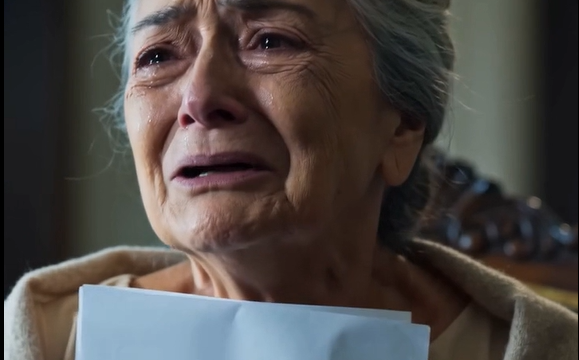
Margaret Lane had spent thirty-two years believing that a marriage was not measured by perfect days, but by the promises two people kept when life became difficult. At fifty-eight, she still believed in loyalty, patience, and quiet dignity. That was why she never announced her sacrifices. She simply made them. She paid the bills when her husband’s business stumbled. She smiled at dinners where he took credit for her ideas.

That Friday evening, Margaret expected nothing more dramatic than a quiet anniversary dinner. Her husband, Richard, had told her he was working late at the private investment club downtown. He sounded tired on the phone, distracted, almost annoyed that she had called. Margaret accepted his excuse without argument. Then, while putting away laundry, she found the receipt.
The receipt was from the Rosemont Hotel. One suite. Champagne. Dinner for two. The date was that night. Her hands stayed steady, but her heart understood exactly what the paper meant too painfully clearly now.
For several minutes, Margaret stood in the hallway holding the paper as if it were something fragile and dangerous. She did not cry. She did not scream. After decades of being underestimated, she had learned that silence could be stronger than noise. She changed into a simple black dress, pinned her silver hair neatly behind one ear, and drove to the Rosemont.
The lobby glittered with gold light and polished marble. Couples crossed the floor laughing softly, unaware that one woman had entered carrying the end of a lifetime in her purse. Margaret asked the front desk for the club lounge.
She found Richard in the corner booth, his hand resting over the hand of a younger woman in a red satin blouse. Richard looked relaxed in a way Margaret had not seen in years. When he lifted his eyes and saw his wife standing beside the table, the laughter died.
“Margaret,” he said, pushing back his chair. “This is not what it looks like.”
Margaret looked at them both calmly. “Then explain it.”
Richard glanced around the lounge, embarrassed less by what he had done than by being seen. “Not here,” he whispered.
“That is interesting,” Margaret said. “Because you seemed comfortable here a moment ago.”
The woman stood, muttered that she should leave, and hurried away. Richard reached for Margaret’s arm, but she stepped back. His face hardened. “Do not make a scene,” he warned.
Margaret almost smiled. For thirty-two years, he had counted on that exact fear. He believed she would go home, cry privately, and ask what she had done wrong.
Instead, she placed the hotel receipt on the table.
“I am not making a scene,” she said. “I am ending one.”
By midnight, Richard discovered how little he truly owned.
Margaret did not rush. She drove home, sat at the kitchen table, and opened the folder her attorney had prepared months earlier. She had prepared it because the numbers had stopped making sense. Company funds moved through secret accounts. Loans appeared with Richard’s signature and Margaret’s property listed as collateral. The beach house her parents left her had been quietly pledged against debts she never approved. The betrayal at the hotel was painful, but it was not the deepest wound.
The deepest wound was hidden in the documents.
Richard had not merely broken his vows. He had used Margaret’s trust as a shield while risking nearly everything she had inherited, earned, and protected for her children. He had told investors he controlled assets that legally belonged to her. He had even tried to transfer shares from the company she founded before their marriage.
But Margaret had noticed.
At 11:47 p.m., she sent one email to her attorney. At 11:52, she sent another to the company’s board. At 11:58, she froze the joint business accounts she still legally controlled. By 12:03, the emergency motions were filed. Richard’s credit lines were suspended before sunrise. His access cards stopped working by breakfast. His board seat was under review before lunch.
When he returned home the next morning, pale and furious, Margaret was waiting in the sunroom with coffee and papers.
“What have you done?” he demanded.
She looked up from the documents. “Protected what you tried to steal.”
Richard slammed his hand on the table. “You are destroying me over one mistake?”
Margaret’s expression did not change. “No. I forgave mistakes for years. This was a pattern.”
He tried anger first. Then pleading. Then blame. He said he felt ignored. He said he felt old. He said the woman at the hotel meant nothing. Margaret listened because she wanted to remember every word clearly.
When he finished, she slid a copy of the transfer request across the table. It bore his signature. Beneath it was a forged authorization in Margaret’s name.
Richard went quiet.
“That,” Margaret said, “is why.”
For the first time in their marriage, Richard had no speech prepared. The man who always knew how to explain himself stared at the paper and understood that the affair was only the door Margaret had walked through. Behind it was a room full of lies.
The children arrived that afternoon. They were adults now, old enough to know that dignity sometimes looked like heartbreak and courage sometimes sounded calm. Margaret told them the truth without cruelty. She did not insult their father. She did not ask them to choose sides. She simply showed them the documents and explained what had been done in their names, with their future placed at risk.
Her daughter cried. Her son left the room, then returned and took Margaret’s hand.
Richard expected sympathy from them. Instead, he received stunned silence.
Over the next week, the life he had displayed so proudly began to collapse. The club suspended his membership. Investors demanded answers. The woman from the hotel disappeared from his calls once his accounts were frozen. The house remained Margaret’s, because it had always been hers. The company remained under her control, because she had built it long before Richard learned how to wear confidence like a suit.
Friends whispered that Margaret had been ruthless. She heard the word and let it pass. People often called women ruthless when they finally stopped being useful to someone else’s comfort.
Months later, after the settlement was complete, Margaret walked alone through the garden behind her home. The roses were overgrown, and the fountain needed repair. For years, she had postponed small joys while managing Richard’s storms. Now the quiet felt unfamiliar, but honest.
She had not wanted revenge. Revenge would have been easy and temporary. What she wanted was restoration. She wanted her children’s inheritance safe. She wanted her name removed from debts built on deception. She wanted the woman she used to be to know that loyalty did not require self-erasure.
The night Margaret walked into the Rosemont, she expected to lose her marriage. By midnight, Richard had lost his cover, his control, and the fortune he thought he could take for granted.
The real shock was never the other woman.
The real shock was that Margaret had known enough, waited long enough, and loved herself enough to leave him with exactly what he had earned.