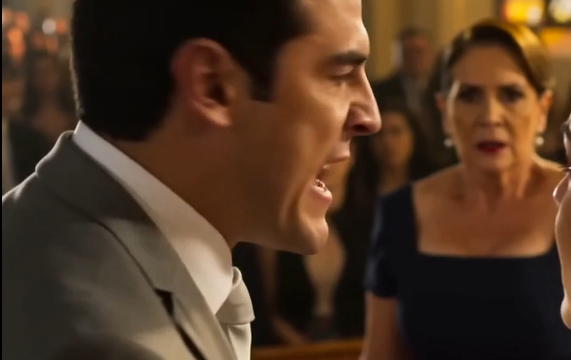
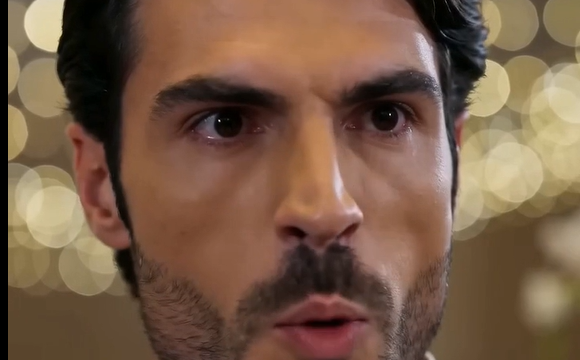
The only sounds left inside the grand hotel lobby were the faint hum of crystal chandeliers and the shaky breathing of the young maid standing beside her overturned cleaning cart. Just moments earlier, the glamorous woman in the emerald gown had filled the room with accusations, demanding justice with the confidence of someone certain she controlled the narrative. Now, however, that confidence was beginning to fracture. Slowly. Publicly. Irreversibly.
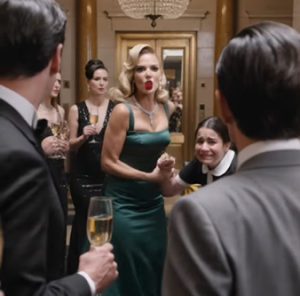
In the hotel owner’s hand rested the missing diamond brooch.
Every guest in the marble lobby still held their phones in the air, but no one looked entertained anymore. The excitement that had fueled the public accusation was fading into discomfort. What had started as humiliation for a powerless employee was turning into something much darker: the exposure of a carefully hidden truth.
The hotel owner remained calm. Men who had spent decades managing the wealthy rarely rushed anything. He allowed the silence to settle over the crowd before finally speaking.
The brooch, he explained, had not been discovered in a servant hallway, housekeeping locker, or janitor’s cart. Security had recovered it only minutes earlier during a discreet investigation upstairs in a private suite. The room was not registered to any hotel worker. It belonged to the fiancé of the woman now standing in the center of the lobby making accusations.
That revelation alone sent a wave of whispers through the crowd.
But the expression on the owner’s face suggested the situation was far from over.
The maid stared at him in confusion, trying to understand what she was hearing. Her eyes moved slowly from the brooch to the woman in green.
“My fiancé?” the woman repeated weakly. The sharp authority she once carried had vanished. “That doesn’t make any sense.”
The owner’s eyes narrowed slightly.
“It makes perfect sense,” he replied evenly. “Especially since security footage shows he wasn’t alone when the brooch disappeared.”
A ripple of shock spread across the guests.
The woman’s face changed instantly.
And in that moment, the maid realized something before anyone else in the room did. This had never truly been about a stolen brooch. The screaming, the grabbing, the public search of her belongings — it had all happened too quickly, too aggressively, too perfectly staged. The wealthy woman had not simply wanted someone blamed. She had wanted the blame attached immediately, before anyone had the chance to question another possibility.
The realization hit the maid so hard that for one brief second, her tears stopped.
The hotel owner continued speaking in the same calm tone, though every word seemed heavier than the last. Earlier that evening, security had noticed unusual movement on the VIP floor. A man leaving the private suite. A woman entering shortly afterward through a restricted service corridor. A brief struggle involving a small reflective object. Then the fiancé himself was later seen placing something into a velvet jewelry case before hotel security stopped him downstairs.
When confronted, the man initially denied everything.
But the owner explained that after years of dealing with wealthy guests, he had learned one simple truth: polished lies rarely survive solid evidence.
Eventually, the fiancé admitted only one thing.
He had wanted to “avoid a scandal.”
The irony hung bitterly in the air.
Because now scandal was all anyone could see.
The woman in the emerald gown attempted to recover some control. She straightened her posture and tried to regain the commanding voice she had used earlier. Yet the fear trembling beneath her words betrayed her completely. She insisted her fiancé would never steal, never hide something, and certainly never put her in such a humiliating situation.
The owner listened patiently without interrupting.
That silence somehow made her look even smaller.
Then he revealed the detail that shifted the atmosphere in the room entirely.
The brooch was not valuable only because of its diamonds. It was an important family heirloom temporarily loaned to the hotel for the gala event. Only a very limited number of guests knew about its significance. Her fiancé knew. She knew.
The maid did not.
The meaning behind that fact spread through the lobby like ice water.
Now the accusation no longer looked emotional or impulsive. It looked calculated.
The young maid stood frozen among spilled cleaning supplies, fallen towels, and shattered dignity. Her embarrassment was still visible, but another emotion had replaced part of it now — painful clarity.
Her eyes lowered to the small photograph lying on the black marble floor. It had fallen from her bag earlier when the rich woman ripped it open in front of everyone. The picture showed her elderly mother and a small boy standing beside her outside an aging apartment building.
A private life.
A fragile dignity.
Both had been tossed across the floor for public entertainment.
Suddenly the entire luxurious hotel seemed uglier than before. The chandeliers, the champagne glasses, the expensive suits — none of it looked elegant anymore. Beneath the glamour was cruelty polished to perfection.
The hotel owner quietly bent down, picked up the photograph, and carefully handed it back to her.
That single gesture brought more shame to the room than shouting ever could.
Then he turned back toward the woman in green.
Calmly, he asked whether she wanted him to continue explaining why her fiancé’s suite mattered even more than people realized.
She opened her mouth to respond, but no words came out.
So he continued.
The suite, he explained, had not actually been paid for by the fiancé himself. The reservation came through an account connected to her family’s private office. According to the booking instructions, the man had been staying there secretly for three nights, under orders that his name not appear on the official gala guest list.
That detail changed everything.
This was not panic.
This was planning.
Guests openly stared now without trying to hide their reactions. The woman’s face lost all remaining color. Yet her eyes did not fill with sadness.
They filled with fear.
Then came the revelation that truly shattered the room.
The owner explained that the maid had only been assigned to that VIP floor at the last minute because another employee became sick and went home earlier that evening.
In other words, she had never been the original target.
She was simply convenient.
Young enough to overpower.
Poor enough not to be believed.
Invisible enough to destroy without consequences.
The accusation had attached itself to the easiest victim available the moment something went wrong upstairs.
The maid looked at the wealthy woman differently now.
Not as someone important.
Not as someone powerful.
But as someone cowardly beneath expensive silk and diamonds.
The owner lowered his voice further before adding that security had also discovered one final item inside the fiancé’s suite: a crumpled handwritten note left beside the velvet brooch case.
At first, he admitted, he had not intended to read it aloud.
But after witnessing what had happened in his lobby, he changed his mind.
Carefully unfolding the paper, he read the sentence written across it.
“If anyone asks, blame the maid. No one will question it.”
A terrible sound moved through the crowd. It was not exactly a gasp. It sounded more like collective shame.
The woman in the emerald gown turned pale.
The maid stopped breathing for a moment.
Because no explanation could erase what everyone now understood.
She had not simply been accused.
She had been selected.
Chosen because people assumed her life mattered less.
The owner finally stepped aside, almost as if he understood that the next moment no longer belonged to him.
The young maid, still trembling and tear-streaked, slowly raised her eyes toward the woman who had dragged her across the lobby and searched her bag in front of strangers.
Then, in a voice so broken that it made the enormous marble room suddenly feel painfully small, she asked:
“You never actually thought I was guilty… did you?”
She swallowed hard before speaking again.
“You just thought nobody would care what happened to me.”