The dinner table had been set with care. Sofía had polished the wooden surface until it reflected the warm overhead lights. She placed white plates evenly, folded napkins beside each fork, filled small baskets with bread, and set glasses near every chair. Behind her, pale curtains softened the evening, and the wooden door to the hallway stood closed, keeping the dining room quiet and intimate. To anyone else, it looked like a simple family meal. To Sofía, it was a chance to be accepted.
She had cooked since morning. The stew had simmered for hours. The rice was fluffy, the vegetables were seasoned carefully, and the chicken had been prepared the way her husband, Mateo, loved it. She knew his mother, Carmen, was difficult to please, but she still hoped kindness might soften her. Sofía believed food could say what nervous words could not: I respect this family. I love your son. I want peace.
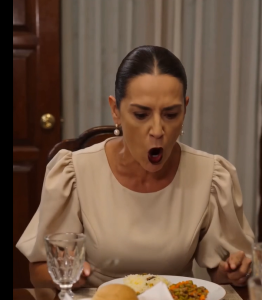
Carmen arrived wearing a beige dress with puffed sleeves, pearl earrings, and dark lipstick. She sat at the table like a judge taking her place in court. Carmen inspected everything with cold eyes. She lifted her fork, cut a small piece, and placed it in her mouth.
The room froze.
Carmen’s face twisted with disgust before she slammed her silverware down. “¡Qué asco! ¡Esto sabe a basura!”
Sofía flinched. The words were cruel enough, but Carmen was not finished. With one furious sweep of her arm, she shoved the plate off the table. It crashed onto the tile floor, breaking into jagged pieces. Food scattered near the table legs, and the ceramic crack echoed through the room like a slap.
For one breath, no one moved. The bread baskets, water glasses, and untouched plates remained perfectly arranged above the wreckage. Sofía stared at the floor, unable to understand it.
Her eyes filled with tears. She blinked hard, but they spilled anyway. She had promised herself she would stay calm tonight. But watching her work lie broken on the floor made something inside her crumble.
Carmen stood, pointing a finger across the table. “¡Ni para cocinar sirves! ¡Mi hijo merece algo mejor!”
The words cut deeper than the shattered plate. Carmen was not only insulting the food. She was telling Sofía she was unworthy of being Mateo’s wife. She was saying that love, effort, and devotion meant nothing if they did not satisfy her pride.
Mateo sat at the end of the table, stunned. For years, he had tried to keep peace between the woman who raised him and the woman he married. He had excused his mother’s sharp comments as stress, habit, or judgment. But this was different. This was not a complaint. This was humiliation.
Sofía’s hands trembled at her sides. She looked smaller beneath the warm light, her long dark hair falling around her tearful face. Her voice came out broken. “Estuve todo el día cocinando,” she whispered. “Lo hice con cariño.”
I spent all day cooking. I made it with love.
The honesty in her voice quieted the room more than any shout could have. She was not defending a recipe. She was defending her heart. The ruined food on the floor was only food, but the rejection behind it was heavy and personal. It carried every dinner where she had been ignored, every visit where Carmen corrected her, every moment Mateo had hoped silence would keep things from getting worse.
Carmen folded her arms, still breathing hard. “Crying will not make it taste better,” she said in Spanish, her tone cold.
Something in Mateo changed.
He stood so fast his chair scraped loudly against the floor. Then he slammed both hands onto the dining table. The plates jumped. The glasses rattled. Carmen startled, her anger breaking for the first time.
“¡Ya basta!” Mateo shouted.
His voice filled the room, not wild, but firm in a way Sofía had never heard before. He turned fully toward his mother, his face tight with fury and pain.
Carmen blinked. “Mateo—”
“No,” he said. “You do not get to speak to my wife that way. Not in this house. Not at this table. Not ever again.”
Sofía looked at him through tears. She had only wanted him to see what the insults were doing to her. Now he finally did.
Carmen’s mouth opened in disbelief. “I am your mother.”
“And she is my wife,” Mateo answered. “You raised me to protect my home. This is my home now, and she is the woman I promised to honor.”
The words landed with the weight of years. Carmen looked toward the broken plate as if she were finally seeing what she had done. But pride fought shame in her face.
“She needs to learn respect,” Carmen said.
Mateo pointed toward the door. His wristwatch caught the light. “Respect is not throwing food on the floor. Respect is not making someone cry because you want control. ¡Respete a mi esposa y salga de mi casa!”
Respect my wife and leave my house.
The room fell silent except for the soft emotional music inside the moment. Carmen stood frozen, no longer powerful, only shocked. She had expected Mateo to apologize for Sofía, to calm the room, to excuse the cruelty the way he always had. Instead, he had drawn a line she could not step over.
Mateo moved around the table, He reached Sofía and wrapped his arms around her. The moment he held her, her strength gave out. She collapsed against his chest, crying into his shirt. He held her tightly, placing his body between her and his mother.
“I’m sorry,” he whispered to Sofía. “I should have stopped this long ago.”
Sofía shook her head, unable to speak. His embrace answered what words could not. For the first time that night, she did not feel alone in the room.
Carmen stared at them. The table was still full of food, but nobody reached for it. The broken plate on the floor had become evidence of something larger than a ruined dinner. It showed what happens when cruelty is allowed to dress itself as family concern. It showed that love needs protection, not just promises. Around that table, everyone could finally see the difference between a mother’s concern and a mother’s control, between honest criticism and needless cruelty.
After a long moment, Carmen picked up her purse. Her face was pale now, stripped of its earlier arrogance. She walked to the wooden door without another insult. Before leaving, she looked back once, perhaps waiting for Mateo to soften.
He did not.
When the door closed, the house became quiet again. Mateo continued holding Sofía until her breathing slowed. The shattered plate remained on the tile, but its power was gone. Carmen had broken the dish. She had not broken the marriage.
That night, Sofía learned that a good husband is not the man who avoids conflict at any cost. It is the man who knows when peace has become permission for disrespect. Mateo learned it too. In choosing his wife’s dignity over his mother’s cruelty, he did not dishonor his family. He protected it, even when truth arrived quietly through tears and dishes.