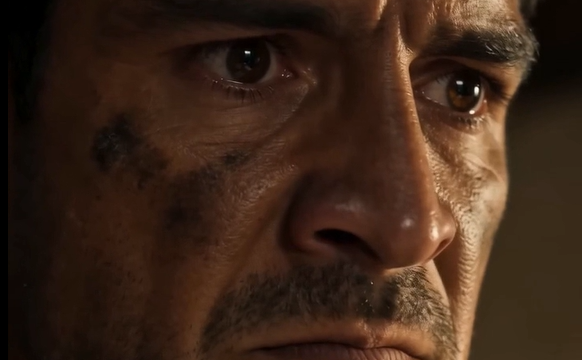
Maribel Cruz could smell the courtroom before she understood how her life had arrived there. Floor wax and cheap coffee hung in the air like a sentence already passed. She sat at the defendant’s table, knuckles pale against fake wood. Twelve years of honest work had brought her here, with strangers waiting to decide whether she was a thief.
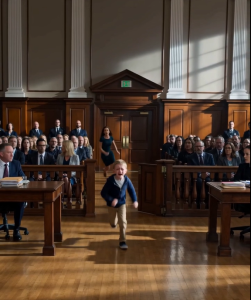
Across the aisle, Eleanor Blackwell lifted a silk handkerchief to one eye. She did it slowly, as if sorrow were rehearsed. Beside her, Grant Blackwell stared ahead, jaw locked. The cameras loved them: a wounded widow, a powerful man, a rich family demanding justice.
No camera seemed interested in Maribel’s trembling hands. For readers, her ordeal became a reminder that evidence matters, but dignity matters, too, especially when power points first and last.
“The Larkspur Emerald,” the prosecutor announced, stepping toward the jury. “A historic stone valued at four point two million dollars. Removed from a locked safe inside the Blackwell residence. No broken windows. No forced doors. No sign of an outside intruder.”
“Only three people knew the combination.”
Maribel felt the room lean forward.
“The victim,” he continued. “His wife. And the housekeeper they trusted for twelve years.”
Maribel swallowed, but her throat had gone dry. She had cleaned the Blackwell home since before Eleanor married into it. She had polished silver, arranged guest rooms, and carried trays through parties where people looked through her. She knew which stair creaked and which papers Mr. Blackwell kept in the study safe. She knew the combination because Charles Blackwell trusted her to place documents inside when he was tired.
Trusted. Now the word sounded like a trap.
The prosecutor lifted a photograph. On the screen, the emerald looked enormous, green and cold against black velvet. Spectators murmured. Maribel had seen it only twice, both times with Mr. Blackwell. He had called it beautiful, then sighed as if beauty could become a burden.
“This was not simple jewelry,” the prosecutor said. “It was legacy. It was history. And it vanished on a night when the defendant had access, opportunity, and motive.”
Motive. Maribel knew what came next. Her rent had been late. Her sister’s medical bills had piled up. Her old car needed repairs. Ordinary hardships, suddenly arranged into a dark story.
Denise Harper, her attorney, leaned close. “Breathe,” she whispered.
Maribel tried. In. Out. It did not stop the shaking.
The jury watched with guarded eyes. Some looked sympathetic, but not enough. Others seemed convinced. To them, she was not Maribel Cruz, who sent money to her mother, attended church, and kept every thank-you note Mr. Blackwell had given her. She was the housekeeper with a key, a combination, and bills to pay.
The prosecutor called a police detective in a pressed suit. He explained that the safe had been opened without damage, the alarm showed no forced entry, and Maribel’s fingerprints were found on the safe door.
Denise stood. “Detective, Mrs. Cruz’s fingerprints were expected there, correct?”
“She had handled the safe before.”
“So fingerprints on a safe she was authorized to use do not prove she stole anything.”
“They are part of the evidence.”
“But not proof by themselves.”
“No.”
For the first time that morning, Maribel felt a little space open in her chest.
Then the prosecutor displayed her bank statements: late fees, overdue notices, a clinic payment plan. On the screen, poverty looked like a crime. Eleanor dabbed her eyes again. Grant did not move.
During lunch, Maribel sat with Denise in a small conference room. Her sandwich stayed untouched.
“They are making me look desperate,” Maribel said.
“They are trying to make desperation look like theft,” Denise answered. “That is not the same thing.”
“I did not take it.”
“I know.”
Maribel looked up. “Do you?”
Denise held her gaze. “Yes. And I think Charles Blackwell knew something before he died.”
His name tightened her chest. Charles had been stern, private, but never cruel. Two weeks before his death, he had asked her to meet him in the library before dawn. He looked pale under the reading lamp and spoke quietly.
“If anything happens,” he said, “remember that people protect fortunes harder than they protect the truth.”
She had not understood then. She understood now.
Back in court, Denise introduced a maintenance report. The prosecutor objected, but the judge allowed it. Denise called Peter Vale, the Blackwell estate manager, to the stand. He looked nervous.
“Mr. Vale, was the camera outside Mr. Blackwell’s study working the night the emerald disappeared?”
“It was reported as malfunctioning.”
“Reported by whom?”
“Mrs. Blackwell.”
A murmur moved through the room. Eleanor lowered her handkerchief.
“And who canceled the technician scheduled to repair it?”
Peter hesitated. “Mr. Grant Blackwell.”
Grant’s jaw tightened.
Denise presented a service email, a security log, and a courier receipt from the morning after the emerald vanished. Each item was small. Together, they changed the air.
“Mr. Vale,” Denise asked, “did Mr. Blackwell recently change his will?”
Peter looked toward Grant, then the judge. “Yes.”
The courtroom went silent.
“Who was removed from control of the Larkspur trust?”
Peter’s voice dropped. “Mr. Grant Blackwell.”
Maribel heard her heartbeat.
Denise turned back to the witness. “So the man who lost financial control also canceled the camera repair, while the person blaming my client reported that camera broken?”
The prosecutor objected. The judge warned Denise to ask questions, not argue. But the jurors were no longer looking at Maribel the same way.
Then Denise called Samuel Roth, an elderly jeweler carrying a black case. He had appraised the emerald years earlier.
“Mr. Roth,” Denise said, “did Mr. Blackwell visit you one week before his death?”
“He did.”
“What did he bring?”
Samuel opened the case. Inside was a green stone under glass.
A ripple passed through the courtroom.
“He brought me the real Larkspur Emerald,” Samuel said. “He feared someone in his family intended to misuse it. He asked me to store it securely and document the transfer.”
The prosecutor stared. Eleanor went pale. Grant turned red.
Denise faced the jury. “Then what was missing from the safe?”
“A replica,” Samuel said. “A very good one, but not the original.”
Maribel covered her mouth. Tears blurred the room, but not from fear.
Denise placed a sealed envelope before the judge. “Mr. Blackwell also left a statement. He wrote that Mrs. Cruz was loyal, honest, and never to be blamed for any disappearance involving the emerald. He named the people he feared, and he explained why.”
The judge read in silence, then looked over his glasses at the prosecutor.
Within an hour, the case against Maribel began to collapse. By late afternoon, the charges were dismissed. Cameras that had framed her as guilty now crowded the hallway for another picture.
Maribel did not speak. She walked past Eleanor’s empty stare and Grant’s furious silence. Outside, the winter air felt sharp and clean. Denise touched her shoulder.
“You are free,” she said.
Maribel looked back at the courthouse steps. Freedom did not erase humiliation or repay sleepless nights. But it returned what the Blackwells had tried to steal with the truth.
Her name.
And this time, everyone heard it clearly.