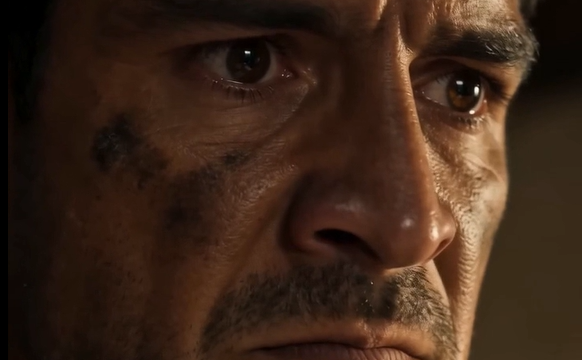
He believed his grandmother had abandoned his mother decades ago. Then a silver pendant, an old photograph, and a dance no one could forget revealed a heartbreaking family secret that changed everything.
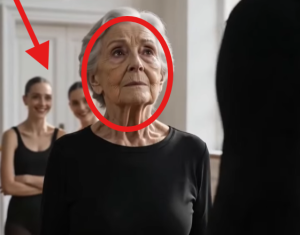
The dance studio fell silent so suddenly that even the faint hum of the lights seemed loud. Every student froze in place, and the young dancer stood motionless with a silver pendant resting in his hand. His eyes moved from the jewelry to the elderly woman standing near the barre. Confusion and disbelief crossed his face.
“No,” he said firmly. “My mother was adopted. Her real mother abandoned her.”
The words struck the woman like a physical blow. She closed her eyes for a moment as decades of pain returned.
“That is what they told her,” she answered quietly.
One of the girls practicing near the mirror stopped smiling. The room felt different now, heavy with questions.
The elderly woman lifted a trembling hand and touched the pendant.
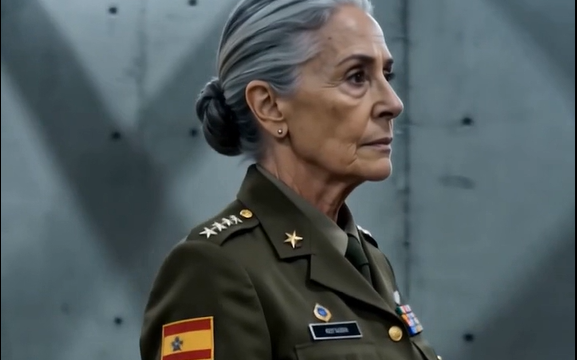
“I was the principal dancer here many years ago,” she said. “I gave birth in the room behind that mirror. Your grandfather owned this school at the time.”
The young man’s expression hardened.
“Don’t lie about my family.”
She looked toward the old office door at the back of the studio.
“He believed a dancer with a child had no future,” she said. “He took my baby while I was still too weak to stand.”
Her voice cracked with emotion.
“I came back every year. I attended every recital and every audition I could. Each time they forced me to leave before she could see me.”
The young dancer took a step backward. The certainty he carried began to disappear.
The woman turned toward the pianist sitting quietly in the corner.
“Please play the piece from the spring recital of 1982.”
The pianist hesitated.
Then the first notes floated through the studio.
The melody seemed to awaken something deep inside her. She placed one hand on the barre and slowly rose onto pointe.
Her body looked fragile with age, but her movements carried strength. Every step revealed heartbreak. Every turn reflected years of being denied the chance to know her child. She danced as though she were reaching across time, stretching toward the daughter she had never been allowed to hold.
The music filled the room while memories seemed to move with every note.
The young dancer watched closely. At first he was skeptical. Then something shifted.
He had seen those movements before.
His mother used to perform the same graceful patterns in the kitchen when she thought nobody was paying attention. Sometimes she would pause while cooking, turn slowly across the floor, and smile at a memory she never explained.
As the dance continued, recognition spread across his face.
The similarities were impossible to ignore.
When the final note faded away, the elderly woman lowered her arm and nearly lost her balance.
The young man rushed forward and caught her before she could fall.
For a brief moment they stood together in silence.
She looked up at him, her breathing uneven from effort and emotion.
“What was her name?” she whispered.
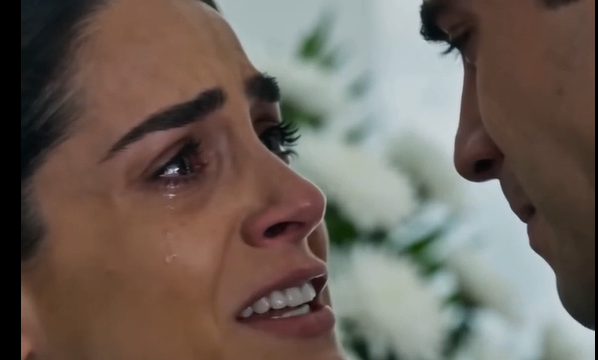
His face crumpled as tears gathered in his eyes.
“Elise.”
The woman covered her mouth.
A sob escaped before she could stop it.
“That was the name I gave her.”
Even the students who had known nothing about the story felt the weight of the moment.
The young man slowly reached into his pocket.
“There’s something else,” he said.
He pulled out a faded photograph.
The edges were worn from years of handling.
In the picture, his mother stood smiling as a child, wearing the same silver pendant now resting between them.
The elderly woman stared at the image as tears rolled down her cheeks.
“She never took it off,” the young man said softly.
Then he turned the photograph over.
On the back, written in gentle handwriting, was a short message.
Find the woman who dances like me.
The elderly woman read the words again and again.
The young man dropped to his knees in front of her.
“She looked for you,” he whispered. “Before she died, she made me promise I would find you.”
The woman’s shoulders shook.
For decades she had carried unanswered questions and regret. She had imagined countless possibilities. She had wondered whether her daughter hated her, forgot her, or never knew she existed.
Now she finally had an answer.
Her daughter had been searching too.
With trembling hands, she reached forward and touched the young man’s face.
The resemblance suddenly became clear. The shape of his eyes, the curve of his smile, even the way he held back tears reminded her of the family she had lost.
Around them, every trace of laughter had vanished.
Only tears remained.
The students lowered their eyes. The pianist quietly stepped away from the keyboard. No one wanted to interrupt the reunion unfolding before them.
“I lost my daughter,” the woman said through tears. “But she sent me her son.”
The young man leaned into her hands.
The pride that had filled him earlier was gone. So was the anger.
In its place stood a grandson meeting his grandmother for the first time.
“I’m sorry,” he whispered. “I should have listened.”
She gently shook her head.
“You were protecting your mother’s memory,” she replied. “There is nothing to forgive.”
Then she pulled him into an embrace.
For years the studio had represented loss. It was the place where dreams were interrupted and where a family had been separated.
Now, in the very same room, something precious was being restored.
He thought about all the questions his mother had carried throughout her life. He remembered the quiet moments when she seemed distant, as though part of her story remained unfinished.
She had always felt the absence of someone she never truly knew.
The elderly woman closed her eyes as she embraced him.
The pain of the past did not disappear, but it no longer stood alone. It was joined by truth, connection, and the knowledge that her daughter had never stopped searching.
The students watched in respectful silence.
Others looked toward the mirrors, reflecting on how quickly assumptions could crumble when the full story finally emerged.
After several moments, the woman gently stepped back.
She studied the young man’s face once more.
In him she could see memories of Elise, pieces of the daughter she had missed, and hope for the future.
Then, through tears and a trembling smile, she spoke the words she had waited a lifetime to say.
“Come here, my beautiful boy,” she said softly. “Let me teach you the dance your mother never got to finish.”
The young man nodded.
Together they walked toward the center of the studio.
The pianist returned to the keyboard.
A familiar melody began to play once again.
This time it was not a song of loss.
It was a song of reunion, remembrance, and love carried across generations.
As the music filled the room, grandmother and grandson stood side by side, ready to complete a story that had remained unfinished for far too long. Their journey could never erase the years they had lost, but it could honor them. And for the first time in decades, the studio that had witnessed so much sorrow also witnessed healing, hope, and the beginning of a new family chapter, finally.