For months, a quiet elderly woman spent nearly all her money buying massive amounts of meat. People assumed the worst. But when a curious butcher followed her to an abandoned factory, he uncovered a secret that left an entire community speechless.
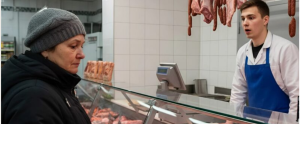
Margaret Hill was seventy years old and lived alone on a small pension in a quiet town where almost everyone knew everyone else. Every morning, regardless of weather, she arrived at the same butcher shop wearing an old gray coat and pulling a battered trolley that rattled across the pavement. The routine never changed. She would step to the counter, offer a polite nod, and ask for forty kilograms of beef. Then she would carefully pay in cash, place the packages into her trolley, and leave without unnecessary conversation.
The butcher, a hardworking young man named Daniel, had served many unusual customers, but Margaret puzzled him more than anyone. Forty kilograms of meat every day was an enormous amount. At first he assumed she was helping a large family. Then he considered that perhaps she supplied a restaurant or cared for animals. Yet none of the explanations seemed to fit. Margaret always arrived alone, always bought the same quantity, and always disappeared before anyone could ask questions.
People at the market quickly noticed the pattern. Vendors exchanged theories whenever she passed by. Some believed she was supporting relatives who lived outside town. Others insisted she secretly owned a kennel. A few even suggested she was selling food without a license. The rumors grew more imaginative with every week, but no one actually knew the truth.
Daniel tried to ignore the gossip. Still, something bothered him. Margaret carried a strange odor that lingered after she left. It reminded him of metal, damp concrete, and spoiled food. The smell was unpleasant but not strong enough to explain anything. More than once he considered asking her directly about the meat, yet her tired face and quiet manner always stopped him.
Curiosity finally overcame caution. One freezing evening, after Margaret left the shop, Daniel followed at a distance. Snow covered the sidewalks, and the town looked nearly deserted. Margaret moved slowly but with surprising determination, pulling the heavy trolley behind her. She crossed several streets, passed abandoned garages, and continued toward an old factory that had stood empty for a decade.
Daniel watched from behind a fence as she entered the building through a damaged side door. Twenty minutes later she emerged with an empty trolley and began the long walk home. The meat was gone.
The next day Daniel followed again. The same thing happened. On the third day he decided he needed answers. After Margaret disappeared inside the factory, he waited a few minutes and quietly entered through the same doorway.
The building was dark and cold. Broken windows allowed narrow beams of light to reach the dusty floor. Daniel immediately noticed the smell. It was stronger than before, a mixture of damp air, old machinery, and animals. Then he heard sounds echoing through the structure. They were not human voices. They were whimpers, shuffling movements, and occasional cries.
His heart pounded as he moved deeper into the factory. Finally he spotted a crack in a wall separating two large rooms. Looking through it, he froze.
Inside were dozens of dogs.
Some were large, some small, some young, and some very old. Many appeared thin. A few limped. Others slept on blankets arranged across the floor. Daniel counted as many as he could and quickly lost track. There had to be more than sixty animals in the room.
Margaret stood among them carrying pieces of beef from a large container. The dogs gathered around her, tails wagging. Despite their excitement, they behaved gently. She spoke softly to them while placing food into bowls lined along the walls.
Daniel felt relief, but it lasted only a moment. The conditions concerned him. The factory was unsafe. Exposed wires hung from the ceiling. Sections of the roof looked unstable. Several animals clearly needed medical care. Unsure what to do, Daniel stepped outside and called the police.
When officers arrived, Daniel explained everything he had seen. Together they entered the building and approached the room where the dogs were sheltered.
Margaret looked frightened when she saw them. She immediately raised her hands and insisted she had never harmed any animal. Tears filled her eyes as she explained her story.
Years earlier, abandoned dogs had begun appearing near the factory. Some had been left by owners who moved away. Others had wandered in from surrounding areas. During harsh winters, many would have died without help. Margaret started feeding one or two animals, then more arrived. Eventually the number became impossible to manage, yet she could not bring herself to turn them away.
She spent nearly all of her pension caring for them. To afford the food, she sold personal belongings and lived with very little. She never asked for assistance because she feared the animals would be taken away before safe homes could be found.
The officers listened carefully. They inspected the dogs and contacted local animal welfare organizations. Veterinarians soon arrived and began examining each animal. To everyone’s surprise, most of the dogs were friendly and healthy considering their circumstances. Margaret had done her best with limited resources.
News of the discovery spread rapidly through town. Residents who had once repeated rumors now learned the truth. Instead of judging Margaret, many felt ashamed that they had assumed the worst without knowing her situation.
During the investigation, officials also discovered notebooks that Margaret had kept for years. Every page contained notes about rescued animals, including where they had been found, what injuries they carried, and how they responded to treatment. Some entries described long nights spent comforting frightened strays. Others recorded veterinary visits she could barely afford. The notebooks revealed that several dogs had later been reunited with owners who thought they were gone forever. Reading those pages, the officers realized that Margaret had quietly created an informal rescue network without recognition or support. Her work had saved countless animals from hunger, illness, and exposure. The records also helped animal welfare groups match several dogs with missing pet reports from neighboring communities. That evidence strengthened public trust and transformed the investigation from a suspicious case into a story of dedication.
The following week volunteers organized a community effort. Donations of food, blankets, medicine, and supplies arrived from across the region. Local businesses contributed funds. Families visited the temporary shelter to meet the dogs and consider adoption.
Daniel helped every day after work. He transported supplies, cleaned kennels, and assisted veterinarians. As he spent more time with Margaret, he realized how much compassion she possessed. She knew every dog’s name, personality, and history. The animals trusted her completely.
Within several months, most of the dogs found permanent homes. Others were transferred to reputable rescue centers where they received continued care. A few remained with Margaret, who was given support from local organizations to ensure they would be safe and healthy.
One evening Daniel visited her small house. They sat together drinking tea while several rescued dogs slept nearby. Margaret smiled and admitted she never expected anyone to understand what she had been trying to do.
Daniel smiled back. Sometimes, he said, the truth behind a mystery is not frightening at all. Sometimes it simply reveals a kindness that has been hidden from view for far too long.