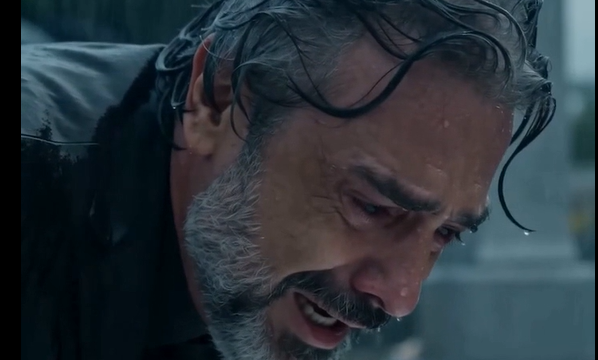
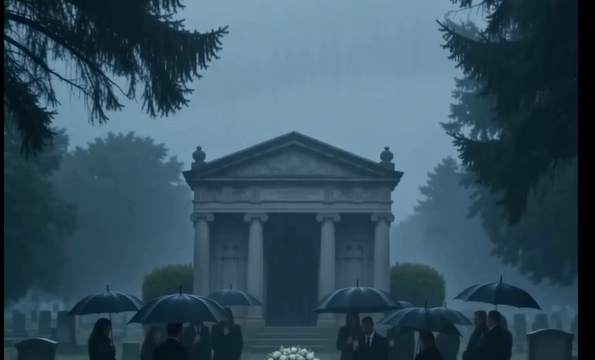
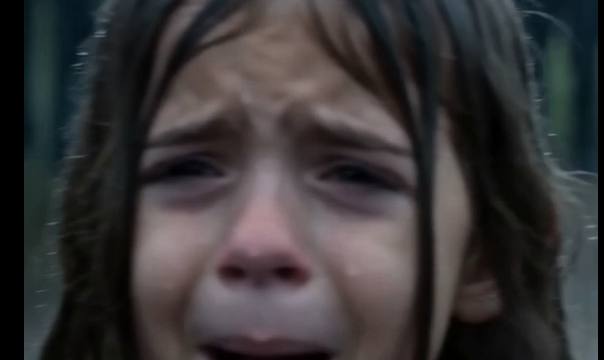
I grew up believing that broken families always stayed broken. My earliest memories were filled with silence, uncertainty, and questions nobody wanted to answer. My parents separated when I was barely old enough to remember their faces together. By the time I learned how to speak in full sentences, my father was already gone from my life. My mother, Elena, carried me to a small farming town called Santiago Vale, where the roads were dusty, the rice fields stretched endlessly beneath the heat, and strong winds blew through thin wooden walls every evening.
Life there was difficult. We didn’t have much money, and sometimes we barely had enough food for the week. My mother worked endlessly, taking whatever jobs she could find. I remember watching her hands grow rough from labor while she tried to smile through exhaustion. As a child, I sensed her fear even when she hid it well.
When I was four years old, my mother remarried. The man she married looked nothing like the fathers I saw in television commercials or school events. Hector Alvarez was a construction worker with tired eyes, sunburned skin, and hands hardened by years of lifting concrete and steel beneath scorching heat. His clothes always smelled of dust, sweat, and labor. He rarely spoke much when he first entered our lives.
At first, I kept my distance from him. I didn’t know how to trust another man after my own father disappeared so completely. Hector never tried to force affection from me. He never demanded respect or attention. Instead, he quietly became part of my everyday life in ways I didn’t fully understand until much later.
Every morning before sunrise, he left for work on an old bicycle that squeaked loudly along the gravel roads. Every evening, he returned exhausted, his shoulders slumped from carrying the weight of physical labor all day long. Yet somehow, despite his exhaustion, he always noticed the little things.
If my bicycle chain snapped, he fixed it without being asked. If my sandals tore apart, he patched them carefully so I could continue wearing them. When I spilled something or broke household items by accident, he never yelled. He simply cleaned up the mess beside me and told me to be more careful next time.
One afternoon, when I was around eight years old, some older boys bullied me after school. They shoved me into the dirt and mocked my worn clothes. I remember sitting by the roadside trying not to cry when Hector suddenly appeared on his bicycle. He didn’t confront the boys or create a scene. He simply helped me onto the back of the bicycle and started pedaling home.
For most of the ride, neither of us spoke. The only sounds were the spinning wheels and the wind brushing against the rice fields. Then he quietly said something I never forgot.
“I won’t ask you to call me father,” he told me. “But I will always show up for you.”
That single sentence changed something inside me forever.
From that day on, Hector became “Dad.”
Our life remained simple. Nothing magical happened overnight. We still struggled financially, and there were days when the electricity flickered because bills had to wait. But Hector never allowed hardship to poison our home. Even after spending twelve hours carrying cement under brutal heat, he would sit beside me each evening and ask the same question.
“How was school today?”
Hector never had much formal education himself. In fact, he often joked that school and him were never good friends. But despite that, he believed deeply in education. He often told me that knowledge was something nobody could ever steal from you.
“Study hard,” he would say. “People respect knowledge. Education opens doors that strength alone never can.”
Those words became the foundation of my life.
As I grew older, school became my escape from poverty. I studied late into the night beneath dim lights while Hector continued working harder than ever. Sometimes I woke up before dawn and saw him already preparing for another exhausting day at construction sites miles away.
When I passed the entrance exam for Metro City University, my mother cried so hard she could barely speak. Hector sat quietly outside smoking an old cigarette while staring toward the fields. Later, I learned he had sold his motorbike to help pay my tuition. My grandmother added her life savings to cover the rest.
I still remember the day Hector brought me to the city for college. He wore an old baseball cap faded from years of sunlight and carried bags filled with food from home—rice, peanuts, dried fish, and homemade snacks my mother prepared. Sweat soaked through his shirt from carrying everything across crowded bus stations and busy streets.
Before leaving my dormitory room, he looked around awkwardly, unsure of what to say in such a foreign environment. Then he smiled and placed his rough hand on my shoulder.
“Do your best, child,” he said softly. “Study hard.”
After he left, I opened the lunch container my mother packed for me. Hidden beneath the food was a folded note written in Hector’s uneven handwriting.
“I may never understand the things you study,” it read, “but I will work for them. Don’t worry about us.”
I cried harder that night than I ever had before.
The years passed quickly after that. College became graduate school. Graduate school became doctoral research. While my classmates came from wealthy families with professional parents, I came from a man who spent his entire life pouring concrete beneath the sun.
But strangely, I never felt ashamed of that.
In fact, the older I became, the prouder I felt.
Every time life became overwhelming, I remembered Hector waking before sunrise to continue working so I could remain in school. Every academic achievement I earned carried his fingerprints all over it.
Meanwhile, the years slowly bent his body. His back curved from decades of labor. His hands became rougher and more scarred. Deep wrinkles settled permanently around his eyes. I begged him many times to retire, especially after I began earning scholarships and teaching assistant positions.
But Hector always laughed it off.
“I’m raising a future PhD,” he would say proudly. “That’s enough motivation for me.”
Finally, the day of my doctoral defense arrived.
I was terrified. Years of research, sacrifice, and pressure had led to that single moment. My mother wore her best dress for the occasion. Hector borrowed a suit from a neighbor because he had never owned one himself. The shoes pinched his feet, and the tie sat awkwardly around his neck, but he wore everything proudly anyway. He even bought a new hat for the celebration.
During the ceremony, he sat quietly in the back row with perfect posture, his eyes never leaving me for a second.
After my successful defense, professors and guests gathered around offering congratulations. One by one, faculty members shook my hand and praised my work. Then the department chair approached my family.
As soon as he saw Hector, his expression suddenly changed.
The professor froze for a moment before stepping closer.
“You’re Hector Alvarez… aren’t you?” he asked carefully.
The entire room fell silent.
Hector looked confused and slightly embarrassed by the attention. Before he could answer, the professor’s eyes filled with emotion.
For a few seconds, nobody understood what was happening.
Then the professor slowly smiled, staring at the construction worker standing in borrowed clothes beside me.
And in that moment, every person in the room realized there was a story none of us had heard yet.
To be continued in the comments below.